
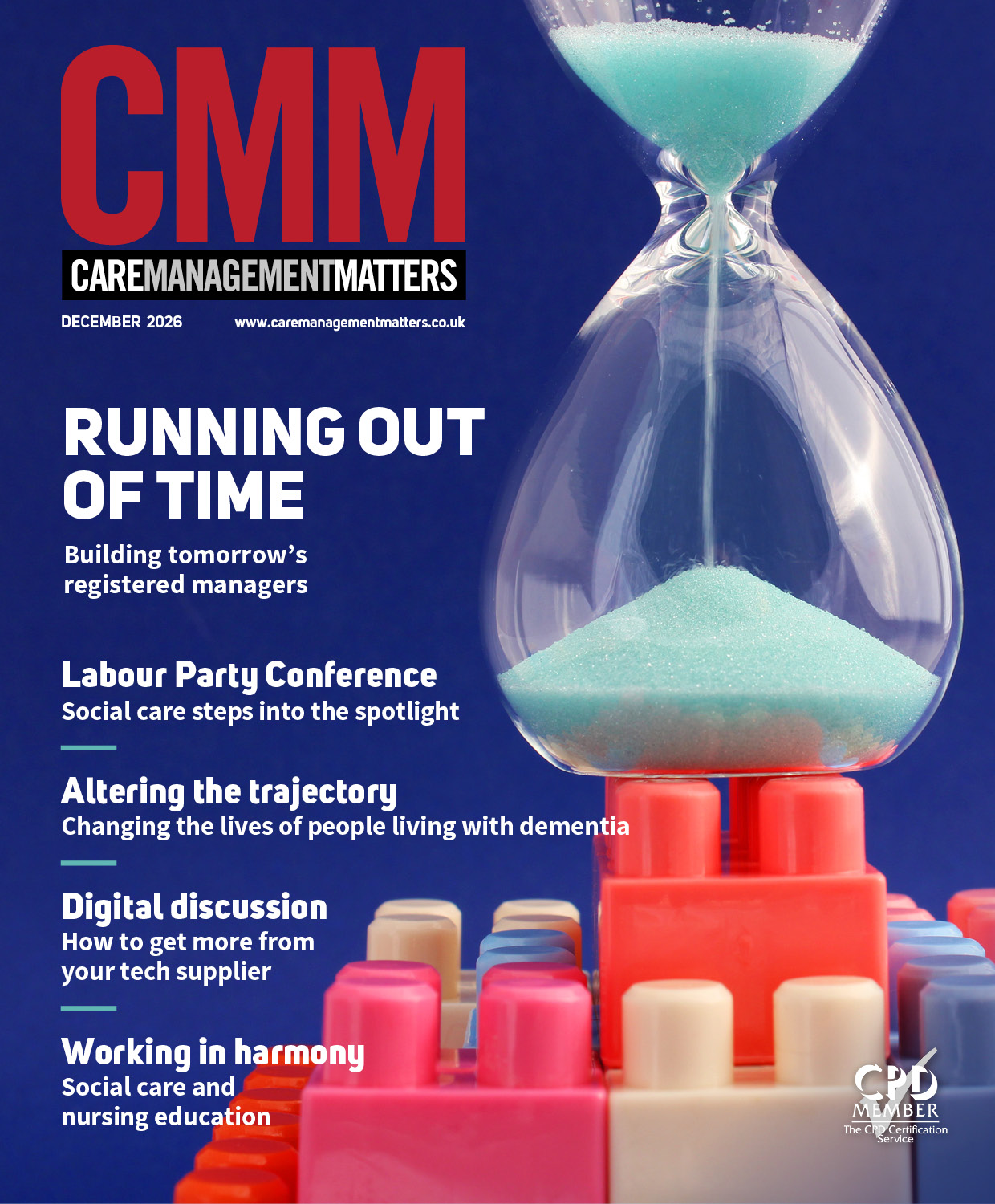
Conversations about care technology often begin with a product demonstration and a list of features. A better place to start is with a simple question: what do we need this technology – and this supplier – to help us achieve?
Start with the person drawing on care. What would help them get safer, joined-up and personalised support? Then consider the care worker searching for information during a busy shift or the manager bringing together care plans, medication records and incidents.
See the supplier as a long-term partner
Choosing technology is rarely a one-off transaction. Services, standards and products change, so the supplier relationship matters as much as the features available on purchase day.
A useful supplier will want to understand who will use the system, what information they need, where work is duplicated and what a good outcome looks like. Providers need to be open about their systems, data quality, workforce pressures and capacity for change.
Both sides have a part to play. Suppliers need to design safe, usable products, meet relevant requirements and provide credible evidence. Providers need to define the care need, involve those affected and retain ownership of the decision. They should also join consultations so new requirements reflect different care settings.
Taffy Gatawa, Chief Information Officer at everyLIFE Technologies, made this point at a recent Digital Care Hub webinar on data standards, ‘If standards are developed in a way that doesn’t reflect the way people work, that can be a real limitation and can really have a big impact in their onward use and adoption.’
Data standards are agreed ways of structuring information so it can be understood consistently across systems and organisations. The Minimum Operational Data Standard (MODS) is an early step towards interoperability in digital social care records, providing a common way to record core information. It is not a new national data return, and providers do not need to complete every field.
Suppliers must ensure their systems can capture relevant information. We covered the wider standards landscape in the September issue of CMM. Digital Care Hub’s later webinar, Smarter Care through Better Standards, explored what providers should expect from suppliers.
Suppliers should explain which standards apply, what they have implemented and whether changes will affect processes or training. Assurance should cover security, information governance, accessibility, business continuity and clinical safety. ‘We are compliant’ is only the start: ask what it means, what evidence supports it and how compliance will be maintained.
Reflecting on their experience completing the NHS England assurance process for digital social care record suppliers, founder of Qwikify and Chief Executive Officer at the Trustsworth Group, Khaled Gamiet, said, ‘I can say without a shadow of a doubt that, having gone through this assurance process, we’ve got a better product as a result. Our product is more secure, it’s more stable.’
Ask about the joins, not just the system
A product can work well on its own and still cause problems if it cannot exchange information with the other systems around it. Ask where information comes from, where it needs to go and what staff have to do when systems do not connect.
Map a few real journeys before meeting a supplier: an admission, medication change, hospital discharge or safeguarding concern. Who needs the information, how is it transferred and where must it be entered again? This makes interoperability – the ability of systems to exchange and use information – tangible.
Better-connected services can mean fewer calls, logins and manual transfers for staff. More importantly, they can improve the experience of the person receiving care. As Taffy put it, ‘That ability to capture information consistently can ensure that people have a better experience and they don’t have to keep repeating themselves.’
Data portability also matters. Can you retrieve information in a usable form? What support and charges apply if you migrate, and how long is data retained? Clear answers reduce the risk of staying with a product because leaving is too difficult.
Keep AI focused on a real need
AI can summarise information, identify patterns, reduce administration or flag issues. These uses may be valuable, but novelty is not proof of effectiveness. AI relies on consistent, good-quality data, so standards and information governance remain central to safe adoption.
Ask first what problem the AI is meant to solve. Will it genuinely save time or improve decisions, or will it add more alerts, dashboards and tasks? Ask what information it uses, how outputs are checked and what evidence supports the claims. How are errors and bias monitored, and when must a person review or make the final decision?
Human oversight is essential because context matters. A pattern may prompt a useful question, but it cannot replace knowledge of the person, professional judgement or a conversation. AI should support relationships and decisions, not displace them.
Examine privacy, security and accountability: whether information trains a model, where it is processed and who can access it. Existing duties around data protection, information governance, clinical safety and risk management still apply. Staff need guidance and permission to challenge questionable outputs.
Manage the relationship after go-live
Before signing, agree who will manage the relationship, how issues and updates are handled and how providers can influence the product roadmap. Ask how the supplier monitors changing standards and explains any action you must take.
Look closely at the evidence behind case studies. What changed, and how was it measured? Was the service comparable with yours? Did the technology reduce work overall, or simply move it elsewhere?
Keep frontline staff and people drawing on care involved after launch. They may spot extra steps, unsuitable language, excessive alerts or hard-to-find information. Their experience shows whether the product works.
Agree review points at the outset. Has the system reduced duplication, improved access to information or freed up time with people? Have updates introduced new risks or workload? Use the answers to improve the product with the supplier.
Questions worth asking
Providers do not need to be experts in standards or AI, but they should feel able to pause a sales conversation and ask:
- What care or operational problem does this product solve?
- Which data, information and technology standards apply?
- How does it connect with our existing systems and those of our partners?
- Can we access and export our data in a usable format?
- What evidence shows that it works in a setting like ours?
- If it uses AI, what data does it use and where is human review required?
- What implementation, training and ongoing support are included?
- How will staff and people drawing on care influence its development?
- How will we measure benefits, workload and unintended consequences?
No single system will suit every provider. The aim is to make informed choices and build supplier relationships that can adapt to the needs and capacity of each service. Keep the focus on the person, be clear about the problem and ask how the technology will improve care in practice. The technical detail matters – but only if it helps to achieve that aim.
Join Digital Care Hub’s free online webinar, Preparing for the Future: Technology, Data Standards and AI, on Wednesday 9th December 2026 at midday. Then share your thoughts on this feature by leaving a comment below.
Katie Thorn is Director of Innovation at Digital Care Hub. Email: [email protected] Linkedin: @Digital-Care-Hub