
Last Updated on September 28, 2026
Kehan Zhou, Group Chief Executive Officer at Person Centred Software, believes that getting AI right simply starts with leaders understanding the jobs their technology is designed to support.
It is easy for leaders to find themselves running a business from behind a spreadsheet. They see the dashboards, the KPIs, the quarterly numbers, and from that vantage point, everything looks manageable. For a while, it is. But eventually the gap between reality and spreadsheets catches up with them. Either the information stops flowing upward the way it used to, or the team ends up operating in a completely different reality to the one the leader believes they are running. The culture the leader thinks they have built, and the culture that actually exists on the ground quietly drift apart.
This matters more than ever as AI moves from the periphery of business into the centre of how work actually gets done. A leader who is disconnected from the work does not just make worse decisions – they set a precedent. If the person at the top is not close to the coalface, why would anyone beneath them be? Delegation has a habit of sliding downward: the most important, most judgement-heavy tasks get pushed further and further down the chain, to the most junior person available, or increasingly, to the algorithm. Left unchecked, that is how you end up with your least experienced resource – human or machine – quietly making your most consequential decisions.
The single best predictor of whether an AI or technology rollout succeeds is not the sophistication of the model or the size of the budget behind it. It is whether the people designing it have actually done the job it is meant to support – not shadowed it, not surveyed it, but done it. It is a principle that increasingly shapes how I think about PCS and the technology we develop. The decisions that matter most are not always the ones that look most impressive from a distance; they are the ones that make a meaningful difference to the person using the technology every day.
Empower, not replace
The question every business leader deploying AI should be asking is simple, but uncomfortable: is this technology making people better at their jobs, or is it quietly replacing them without improving the quality of the work?
One way to tell is to look at what happens to the time it frees up. If automating a task simply clears the way for another task that can also be automated, you have not empowered anyone – you have just replaced people with technology. But if that time goes towards the parts of the job that genuinely require a human – judgement, care, conversation, relationships – then technology has done exactly what it should.

I came to understand this properly in social care, an industry I did not come from and had to learn before I trusted my own instincts about it. When I first entered the social care sector, I was reliant on trade press and second-hand reports from the team, but as a leader I needed to feel confident in the decisions I was making. So, I went and lived in a care home for an entire week, not as a visitor but as a resident.
I remember talking to one of the managers when she suddenly had to excuse herself. She had promised a resident they would sit down together over a cup of tea and she would paint the resident’s nails – and she did not want to keep her waiting. It sounds like a small thing, but that was precisely the point: the value of technology is found in the moments that have nothing to do with technology at all.
That experience has stayed with me and continues to shape my vision for PCS. As technology becomes more capable, the temptation will inevitably be to ask how much more it can do. I think the more important question is what it can enable people to do better. In social care, that means giving carers more time and capacity for the things only they can provide.
Staying close to the realities of care
None of this is unique to care. Every sector facing AI adoption is wrestling with the same fork in the road, whether it is retail staff being freed from admin to spend more time with customers, or recruitment teams spending less time screening CVs and more time actually speaking to candidates. Across industries, the underlying question does not change: is the time being reinvested in what people do best, or simply being used to squeeze out more of what a machine could do anyway?
Get that wrong at scale, and you do not just end up with disappointing technology. You end up with a workforce that has been quietly deskilled and demoralised, often without anyone consciously deciding that should happen.
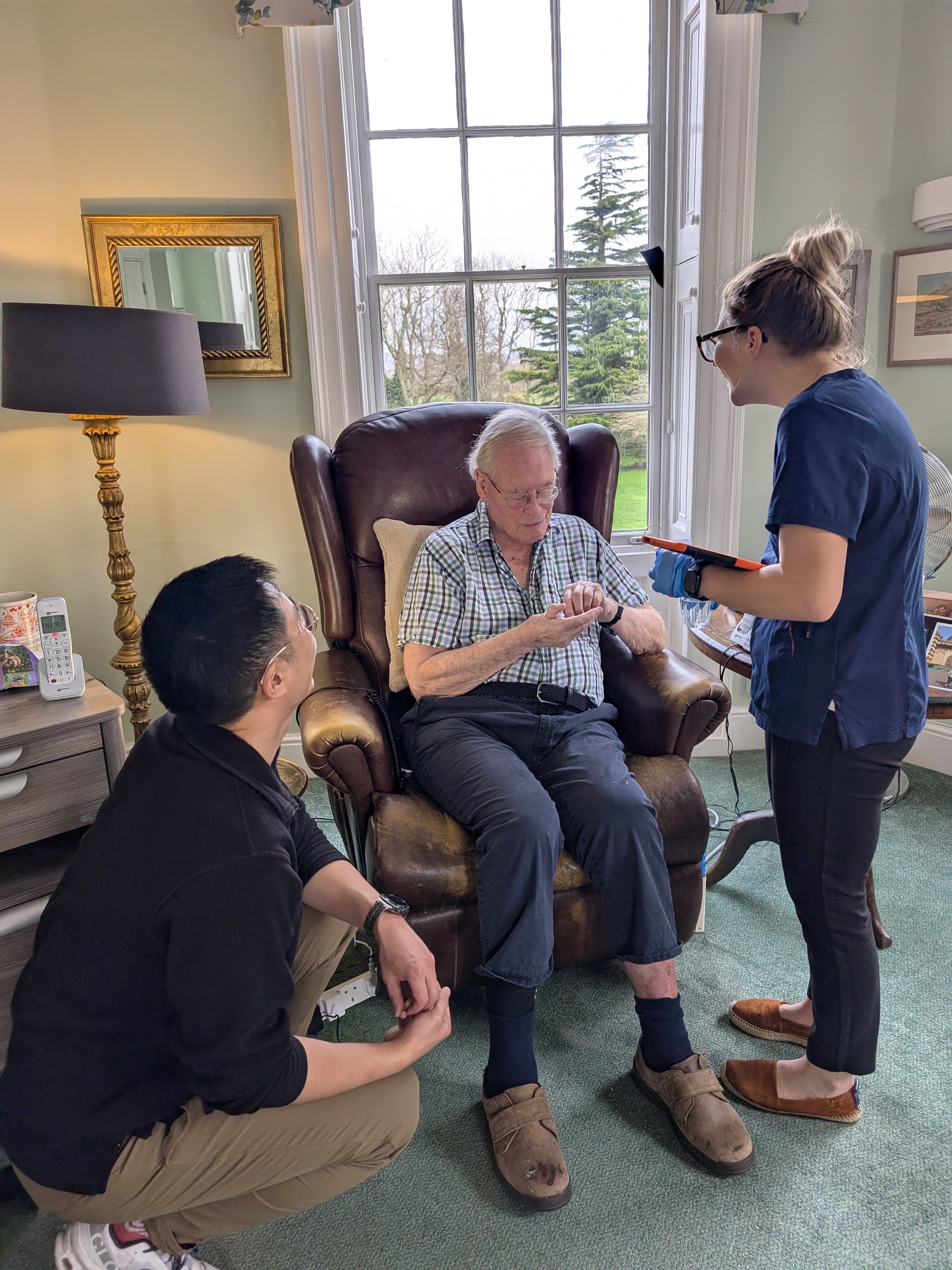
Confidence in that judgement is not something you can get from a dashboard. It comes from proximity to the work itself. Leaders who stay close enough to see how time is actually being spent – not how it is meant to be spent according to the org chart – are the ones who catch the drift before it becomes a crisis. For PCS, staying close to the realities of care has to be fundamental to how we think about the technology we develop.
So before signing off on the next AI investment, the question worth asking is not only, ‘What will this automate’ It is, ‘What will people do with the time this gives back?’ If you do not already know the answer, that is usually a sign it is worth going and finding out yourself, on the ground, before the decision gets made for you.
About Person Centred Software

Person Centred Software’s digital tools help thousands of care teams record, plan and deliver better care every day. Discover PCS’s range of services from eMAR and data intelligence to wellbeing activities and staff training.