
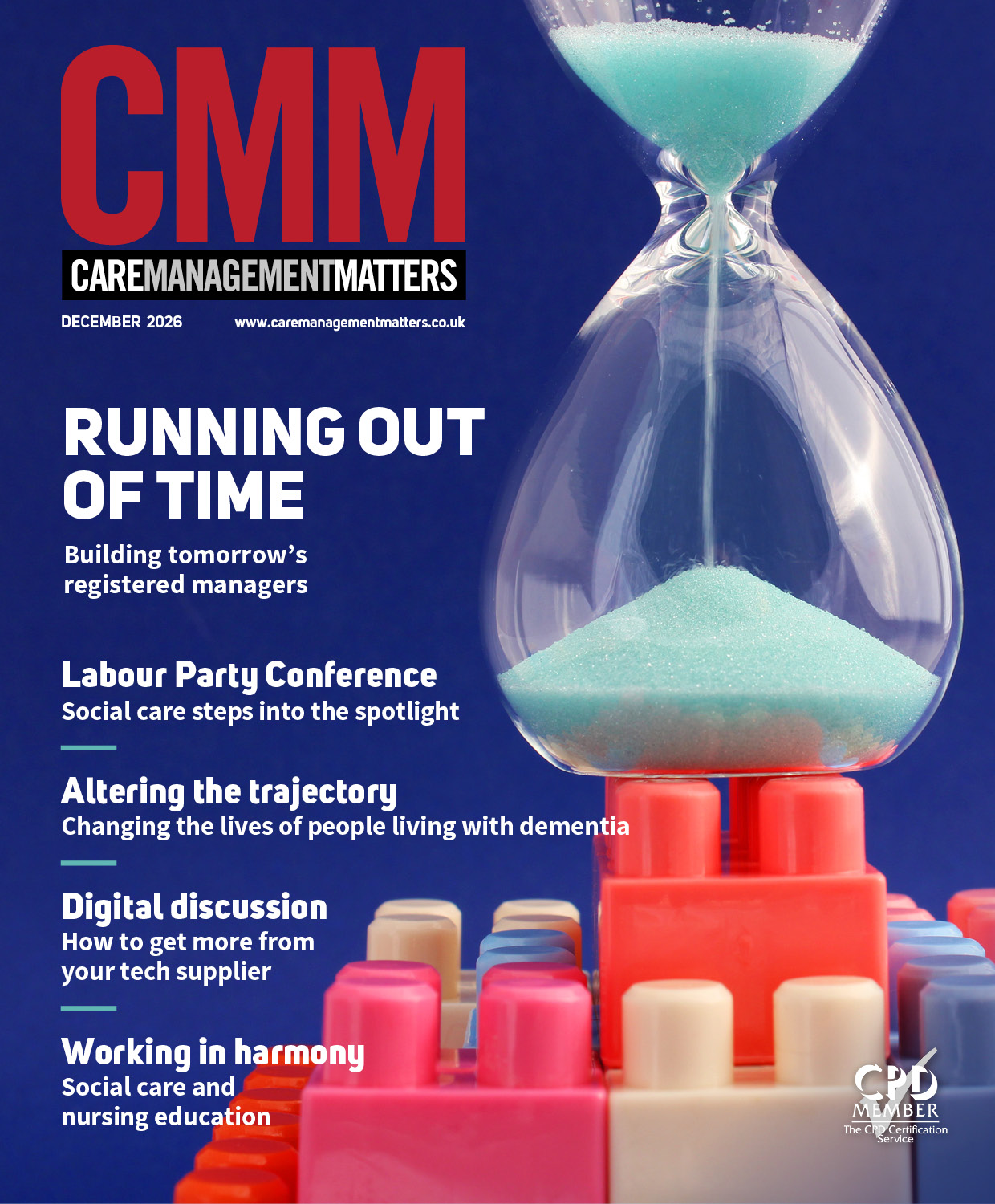
Nearly a third of the sector’s registered managers in England are aged 55 or over. Skills for Care’s 2025/26 figures put the proportion at 31%, with vacancies at 10.2%, compared with 6.2% across adult social care. The manager vacancy rate has improved, but the need to prepare successors cannot wait.
The Care Quality Commission (CQC) requires care home providers operating as organisations to have a registered manager for their regulated activities. Registered managers share legal responsibility with the provider for meeting the relevant regulations. This is a pipeline that needs filling now, with people who are not yet ready but could be, given a proper head start.
Start earlier than feels comfortable
Waiting until a deputy manager post opens leaves little time to build what a registered manager needs: confidence with regulatory accountability, sound safeguarding judgement and the ability to lead a home’s culture. Look instead at senior care practitioners and lead practitioners now, a full stage before any deputy manager vacancy exists. Not everyone wants the top job, and that is fine. For those who do, spotting their interest early gives providers time to prepare them properly.
By the time someone reaches deputy manager, their ambitions and development needs should already be understood. That stage should test their readiness against real operational responsibilities – rostering, resource management and management cover – with clear authority and access to support. One mistake is promoting the person who reliably solves every shift problem, then assuming they will be equally comfortable managing the service. Their contribution deserves recognition, but we still need to establish whether they want management and what preparation they need.
Another is keeping development within one manager’s gift. Colleagues they see most often may receive opportunities that equally capable night staff or part-time practitioners never hear about. Publish the pathway, invite expressions of interest and use consistent criteria when allocating support. For deputies, agree protected development time and named support. Review whether the planned experience actually happened. If every staffing shortage cancels their management development, address that before calling them unready for promotion.
Map development against a real structure
Ambition without a framework can produce frustration instead of managers. The Care Workforce Pathway gives providers a national structure to map against, regardless of size. It sets out knowledge, skills, values and behaviours across roles, including practice leader, deputy manager and registered manager.
Review the roles you already have and map their responsibilities honestly against it. A lead practitioner’s focus is practice leadership. A deputy manager needs experience of operational management and regulatory responsibilities. Treating the second as simply a bigger version of the first leaves important gaps in preparation. A job description saying ‘support safeguarding’ gives a deputy little direction. Do they recognise concerns, understand reporting procedures, contribute to enquiries and check that agreed actions happen? Establish what they have actually done and where they still need supervision.
Apply the same approach to governance. Can they investigate a recurring medication recording problem, agree corrective action and check whether practice improves? Have they helped prepare a complaint response or explained an improvement plan to residents and relatives? Those questions give the development plan something specific to address. Arrange supervised responsibility for the work, then review the decisions together. Writing ‘understands governance’ into an appraisal tells us less than seeing how someone follows a concern through to a checked outcome.
Use the evidence that already exists
A manager’s judgement is an important starting point, but it needs evidence behind it. Otherwise, succession decisions can rest on who appears confident or who happens to work most closely with the manager. Care records offer one source of that evidence.
Who writes consistent, well-evidenced care plans? Who flags a concern promptly, closes actions rather than leaving them open and explains the reasoning behind decisions? None of this requires new technology. It requires someone to examine the records already being produced as evidence for a development conversation, rather than reading them only to check compliance.
Documentation cannot establish readiness on its own. Read it alongside observations of practice, feedback from residents and colleagues, and discussion with the practitioner. Where someone receives help drafting records, ask them to explain the decisions behind the entries and what happened next. A senior care practitioner demonstrating sound judgement deserves a conversation about progression. Equally, confidence with written English should not determine who receives an opportunity. Assess the person’s practice and reasoning.
Fund the gap between capable and ready
Capability and readiness are not the same thing. Someone can understand rostering, medication oversight and safeguarding in theory and still lack confidence when a difficult decision arises. That gap needs shadowing, structured mentoring and relevant qualifications – not a title change and good wishes.
The Learning and Development Support Scheme allows eligible adult social care employers in England to claim towards approved training and qualifications, including development for deputies and registered managers. Providers should check eligibility, reimbursement limits and claims requirements before committing expenditure.
Skills for Care’s registered manager and aspiring and deputy manager networks offer peer support. Registered manager membership also includes opportunities to receive mentoring. Build suitable support into the development plan rather than leaving the individual to find it alone.
A deputy shadowing a registered manager through an inspection, a difficult complaint or an improvement review can see how preparation, judgement and accountability come together. Discuss the decisions afterwards, not just the outcome. Budget for time as well as qualifications. Someone needs space to study and practise; their mentor needs time to support them. Expecting both to fit development around a full workload leaves preparation dependent on goodwill.
Protect the pipeline from pay compression
None of this survives if the pay gap between deputy and registered manager does not reflect the extra accountability. Review the differences across senior practitioner, lead practitioner, deputy and registered manager roles against the responsibilities each carries.
Consider contracted hours and expectations outside them, not just the annual salary. A promotion should remain worthwhile once the person understands what the job requires. Succession planning and pay review have to happen together. Develop someone for two years, then lose them to a competitor over a £3,000 gap, and the provider has trained someone else’s manager.
Ask deputies privately what would make them hesitate to accept the job. Listen without treating their answers as a lack of commitment. They may want progression while reasonably questioning the hours, support or expectations attached to it.
Look at what happens when the current manager takes leave. Who makes decisions? Who handles calls? If routine matters still follow the manager home, prospective successors can see what they would inherit. Review reliable deputy cover, administrative help, access to senior advice and arrangements outside normal hours. Where those depend on personal goodwill, put something dependable in place.
Ask current registered managers what they would change about their jobs. Act on recurring concerns before offering the same conditions to the next person. A development programme cannot compensate for a job people have good reason to decline.
What this looks like done properly
It starts with spotting potential at senior or lead practitioner level, well before a deputy manager vacancy forces the question. Map development against the Care Workforce Pathway and check managerial judgement against evidence from records, observed practice and conversations with colleagues. Fund relevant learning, protect time to practise and pair development with pay review. Be honest about the support available and the work still needed before someone could credibly apply for registration.
At each review, ask who could provide temporary cover, who might become a registered manager candidate within 12 months and what preparation remains outstanding. Those are different questions. Covering annual leave does not, by itself, establish readiness for registration. Record the individual’s wishes, agree the next steps and name the person responsible for supporting them. Where nobody is ready, say so. That gives the provider time to arrange development, recruitment or interim support before a resignation forces the decision.
Where the sector needs to move
An age profile cannot tell us exactly when managers will retire. It gives us reason to prepare, not permission to assume we have 15 years left. The pathway from senior care practitioner through lead practitioner and deputy manager to registered manager needs attention now. Providers should look for colleagues whose capability extends beyond their current role, without assuming every home already has a ready-made successor.
Start the conversations, examine the evidence and commit resources. At the next review, ask what has changed: someone should have gained experience, completed learning or received support they did not have before. Succession needs to be a standing item, with named responsibility and regular review – not an emergency response when a registered manager hands in their notice.
What is your organisation’s strategy for preventing manager shortages and what could be changed? Comment on this feature or join the conversation to share your thoughts.
Kevin Humphrys is Chief Executive Officer of Oakland Care Group and a Board Member of West Sussex Partners in Care. Email: [email protected] Linkedin: @Kevin-Humphrys