The Markel 3rd Sector Care Awards celebrate excellence, dedication and creativity across the not-for-profit sector. They honour individuals and organisations whose work is changing lives across the UK — and this year, the Wey Aye Lego Man project stood out as a symbol of how the arts can elevate unheard voices. The exhibition is testament to what is possible when creativity, inclusion and innovation come together. Backed by the expertise of local photographer Adam Brown from Visual Voice and working as part of New Beginnings North East Ltd, Ngage has created a space where neurodiverse individuals and people with learning disabilities can tell their stories — using Lego minifigures as their voice.
Neil Galjaard, the Divisional Managing Director at Markel, stated, ‘Each year, we are humbled and inspired by the dedication, resilience and compassion of those working in the third sector – Ngage North East Ltd truly embodies this and it is inspiring to see their journey. The Wey Aye Lego Man Photography Exhibition brings together a group of artists and creatives who are using art to tell stories, make connections and spread positivity. Their passion makes you want to be part of their group, and their person-centred approach means there is always a way you can get involved.’

Simple but profoundly impactful
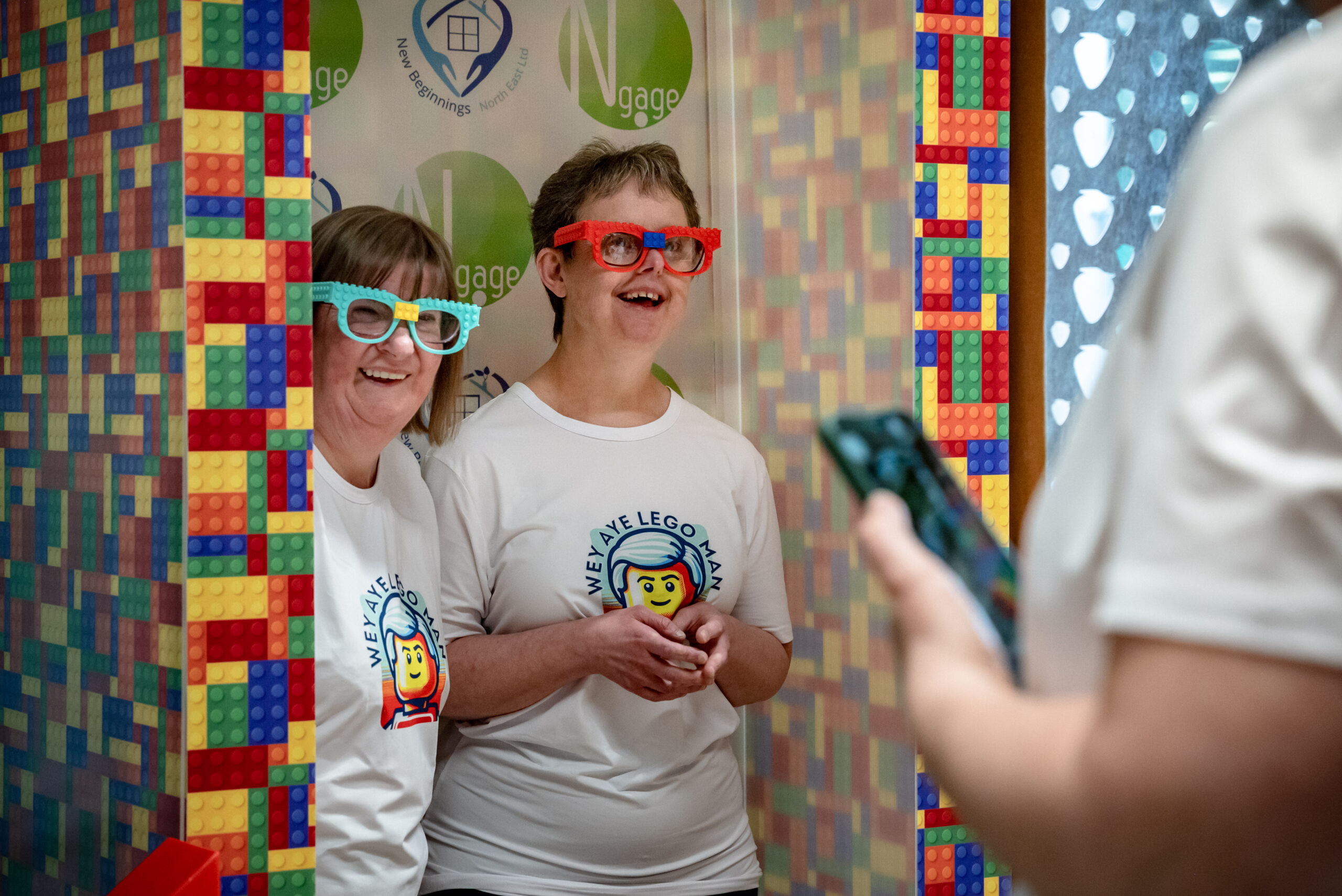
Wey Aye Lego Man is a photography exhibition which uses the iconic Lego mini figure as the focus and, of course, is born from the banks of the Tyne. The concept behind the exhibition is simple but profoundly impactful. Participants stage and photograph Lego mini-figures — creating vibrant, imaginative portraits that reflect their personal experiences and perceptions of the world. Since its inception in 2023, the project has featured more than 150 Lego-themed photographic portraits, all crafted by individuals with learning disabilities and/or autism. The youngest artist is just 11 years old; the oldest is in their 70s — a broad and inspiring spectrum of age, background and vision.
Lego has proved to be a universal language. Everyone has some sort of memory of Lego. Artists can choose faces, bodies that replicate who they are, who they would like to be or someone completely different. Different accessories or facial expressions can show important insight into both the artist and their unique view of the world. Photography, much like Lego, is another leveller — an artform that allows for accessible and personal expression capturing a moment, an emotion or how someone perceives the world around them.
For many of the participants, this was their first experience using a camera, let alone professional-grade equipment. But thanks to the guidance of Adam Brown and the use of adaptive technologies — including large camera buttons and bespoke modifications hand-built by Adam himself — everyone had the chance to participate fully and create stunning art.
Workshops went beyond basic photography, exploring dynamic and often high-concept techniques. Participants learned to experiment with high-speed photography, light painting and location shoots along the Tyne — pushing both technical and creative boundaries. Lego figures were even electrocuted using a Tesla coil, producing dramatic sparks and light effects captured through long-exposure techniques. These sessions did not just teach photography; they turned it into a playground of imagination and science. We really strive to make it accessible to everyone and create amazing professional-quality images with everyone who attends our workshops.
The biggest challenge in setting up the project was certainly not the talent, passion or creativity of the artists. It was not even the challenges or perceived challenges of disability — these, with adaptations and the right support, can be overcome. It was sadly the lack of opportunities and support from gallery spaces and institutions. As a result, the team began creating their own exhibition venues in community spaces — including a working community farm in Ouseburn and the stunning art deco John Marley Centre.
The art world is notoriously hard to crack and navigate and this can especially be the case for someone who is neurodiverse or has a learning disability who already has numerous barriers to overcome before they can get a foot in the door. The exhibition has been a powerful reminder about what people can achieve with the right support, opportunities and the importance of inclusivity in arts to ensure their unique voice and perspectives are heard.
The 2025 Wey Aye Lego Man exhibition was held on 2nd May at One Strawberry Lane, an incredible modern venue in Newcastle owned by Home Group within the shadow of the much-loved St James’ Park. The setting was a fitting one for a project rooted so deeply in the city’s community and spirit. For the first time, this year’s exhibition also included custom Lego plaster cast models sent from artists across the UK who wanted to support the exhibition. These imaginative additions ranged from miniature versions of the Mona Lisa to Lego figures adorned with giant brains or knitted bumblebee costumes — quirky, creative and deeply individual to the artist.
Accessible to everyone
The award-winning impact of the project has been felt not just in accolades but in lives transformed. Julie, for instance, had never used a professional camera before taking part in the exhibition. Today, she is not only exhibiting her work but also creating her own social media content and speaking at public events. Ashleigh, another participant, recently presented her artwork to the Lord Mayor of Newcastle, Councillor Rob Higgins, who had successfully bid on her photograph.
We are incredibly proud to win the Creative Arts award and to have had the opportunity to be among so many inspiring individuals and groups who make up the not-for-profit care sector. Winning this award is a fantastic recognition of the Wey Aye Lego Man Exhibition and the power of creativity to break down barriers. Art should be accessible to everyone and this project has shown that with the right opportunities, anyone can engage, express themselves and be part of something extraordinary. We hope this inspires more people to explore the arts and see that creativity knows no limits.
Mark Butcher, Community and Media Co-ordinator at Ngage and one of the exhibition’s original pioneers, echoed this sentiment, ‘The success of Wey Aye Lego Man reflects our unwavering belief in the power of creativity to change perceptions, celebrate neurodiversity and unite communities. Lego is a universal language that bridges gaps and connects people from all walks of life. It’s truly rewarding to see our vision continue to grow and inspire.’
The exhibition’s ripple effects continue to grow. This year saw new partnerships emerge, including with Home Group, which hosted the event, and North Standard — one of the world’s largest shipping insurance companies — which has now come on board as a Community Partner. As one exhibition visitor movingly put it, ‘We have never felt so welcome and included as our tribe is very neurodiverse. This is especially important to us in a world that isn’t so friendly right now to people who might be seen as different. The staff team is very special and has gone that extra mile for our family.’
At the heart of Wey Aye Lego Man is a powerful idea – that art can be a bridge, not a barrier. And as the project continues to expand and reach new audiences, it remains a testament to what is possible when people come together as a community, break down barriers that exist for people and dare to imagine a world where creativity belongs to everyone.
For more information about the Markel 3rd Sector Care Awards, click here.
Rachel Spencer is Director at Ngage North East Ltd. Email: [email protected] LinkedIn: @Rachel-Spencer-Ngage-NE-Ltd