
The tour was in partnership with Adaptive Care and its parent company, CLB, who kindly hosted roundtable discussions and demonstrations of innovative technologies at its offices. Also arranged were visits to two care settings, The Hogeweyk dementia village which demonstrates an innovative model of care, and ‘s Heeren Loo which provided members with an opportunity to see innovative technology in practice.
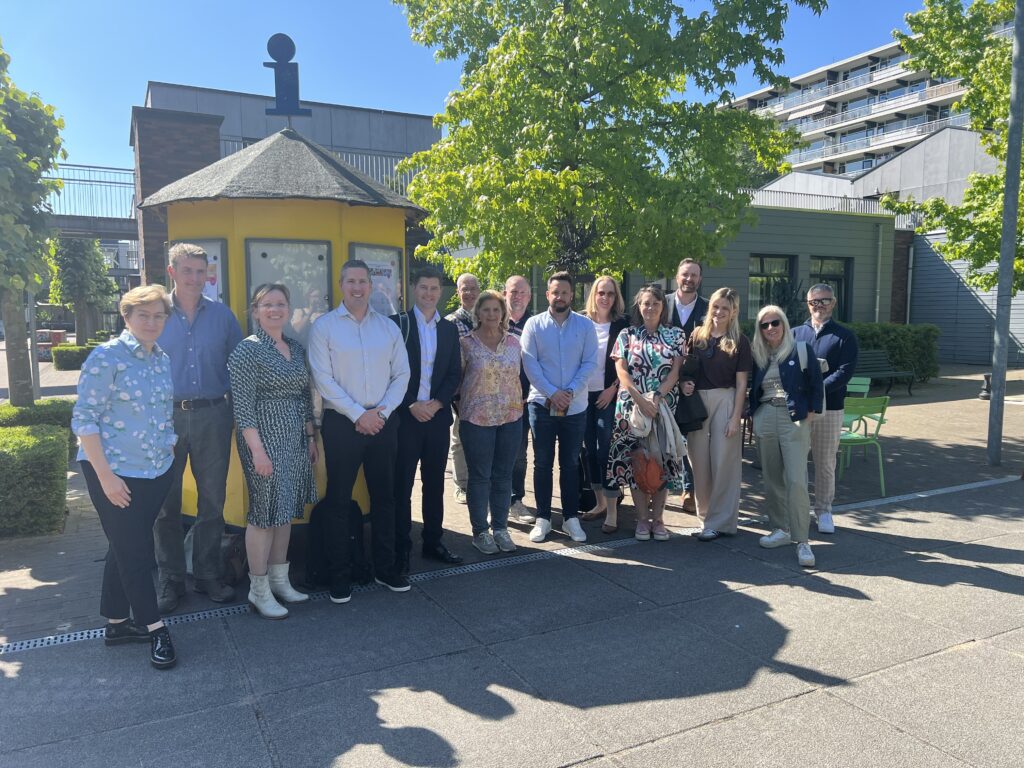
Joining NCF on the tour were Nick Barker from Avante Care & Support, Dawn Berry from Borough Care, Matt Craven from The Orders of St John Care Trust, Brian James from Cedarmore Housing Association, Jonathan Palmer from Somerset Care, Martin Rix from Belong Villages and Sara Thakkar from Camphill Village Trust. The services represented by the group spread across residential and nursing homes, sheltered accommodation, supported living, community living, extra care, village living environments, day services and rehabilitation. Organisations also ranged in size and geographic locations serviced.
Global connections
NCF has a deep interest in international working and a strong belief in the power of the care sector looking outside of the UK for learning opportunities. NCF is a member of the European Ageing Network and I am the current Chair of the Global Ageing Network. These associations have created strong collaboration with colleagues from across the world that help support learning for NCF’s members and the membership organisation’s ability to advocate and champion potential transformations with Government.
For many years, NCF has focused on digital transformation within the adult social care sector and has an established Digital Transformation team dedicated to creating opportunities for our not-for-profit members to progress the use of digital technology in their organisations. Shortly after the study tour, NCF launched the Adult Social Care Testbed, a unique partnership with the University of Liverpool made possible by funding from the Liverpool City Region Life Sciences Innovation Zone Programme.
The project will enable providers in the region to work with expert technologists to drive the development, testing, implementation and data capabilities of new technologies. The project participants’ staff and the people they support will also be vital collaborators in the progression of this work. The testbed aims to build digital skills across every level of the care and support workforce and enable people who draw on care to confidently welcome technology into the places they receive their care, enabling them to live more independently.

Driving Government policy
We were pleased that Emma Donnelly, Strategy Lead in the Adult Social Care Technology and Data team at the Department of Health and Social Care, joined the tour. That team is focused on driving forward recommendations from People at the Heart of Care, a white paper developed under the previous government to support the digitisation of care records and testing, piloting and evaluating different types of technologies, including falls prevention technology.
In January, new Government standards were published to help providers select the right technologies and make better use of care data. Emma took part in the visits and roundtable discussions where she heard from not-for-profit care and support providers about their appetite for the use of technology and the challenges they are facing around achieving those ambitions. Development of current Government policy to progress the use of technology in care, as supported and advised by the sector wide Digital Social Care Advisory Group which I Co-chair, provided useful framing for discussions.

Lessons from abroad
In the Netherlands, acoustic monitoring has been widely adopted for decades, fulfilling an ambitious national government-backed drive to create improved health and wellbeing outcomes for residents and increased efficiencies for care providers. For care providers, these include significantly fewer falls, 75% fewer in some cases, meaning hospital admissions and ambulance callouts are reduced, which also creates cost savings. Improved health and wellbeing amongst residents, thanks to a full night’s sleep instead of being disturbed by night checks, is also well documented.
Adaptive Care has worked closely with several NCF members in implementing this type of equipment in a variety of care settings, making them the UK first care providers to utilise CLB acoustic monitoring technology. NCF has built on that experience, actively promoting and encouraging implementation of acoustic monitoring and ensuring that Government is kept aware of adoption. NCF member, WCS Care, has achieved its objective to reduce nighttime and daytime falls in its homes by 55% through implementing CLB acoustic monitoring and is progressing the roll out of this technology throughout its service.
Best practice observations
During the study tour, members visited The Hogeweyk, the world’s first dementia village in Weesp, just outside Amsterdam. The tour was led by Hogeweyk Founder, Jannette Spiering, who guided members around the facilities and explained the history and culture of this lively community and the innovative vision for care which encourages residents to focus on possibilities, not disabilities. The village employs a societal rather than medical model of care to suppress dementia symptoms such as depression, restlessness and fear.
Residents are monitored by care staff for safety but have the freedom and autonomy to independently navigate their way round the village and take part in regular clubs and activities where they can indulge creative instincts. They live together in household groups, where they plan menus together, shop for groceries in the supermarket, cook, eat and socialise together with people who have similar interests.
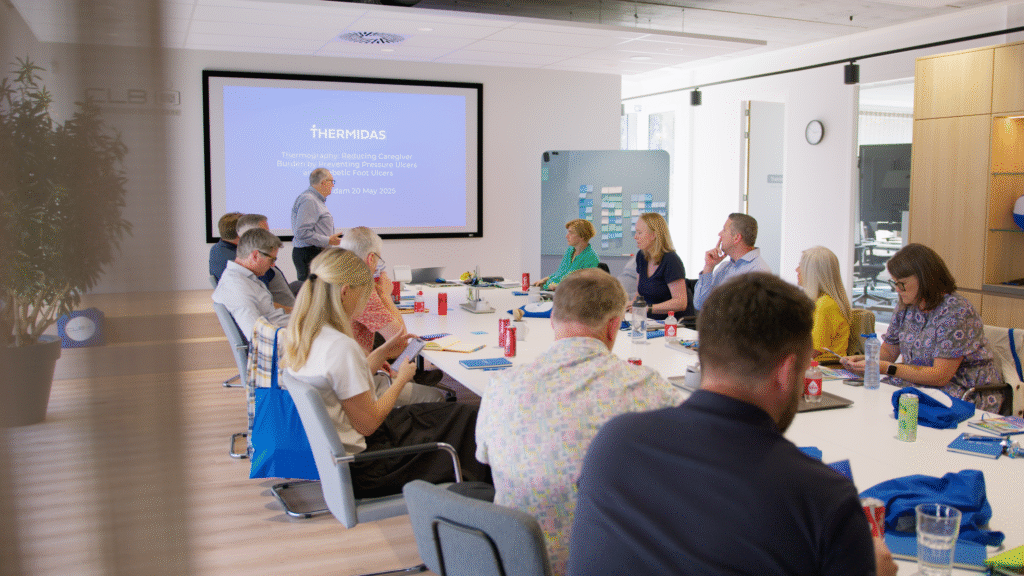
The second day of the tour, at CLB’s offices in Oosterhaut, focused on demonstrations of innovative technologies and detailed knowledge exchange sessions between technology providers and care providers. Members learned about thermography with a demonstration of how the Thermidas thermal imaging camera technology allows quick and easy detection of asymmetric body temperatures indicating underlying pathologies, such as inflammation, circulatory issues and possible ulcerations.
Members were also given an in-depth and practical demonstration of CLB’s latest acoustic monitoring technology and discussed the practical implications of implementation in their own settings. Challenges identified included funding and commissioning restrictions, delivering on return on investment, digital literacy amongst the workforce, resistance to culture change, speed of change and future planning.
The tour ended with a nighttime visit to ‘s Heeren Loo, a large residential care setting providing support for residents with a diversity of care and support needs. During the visit, members witnessed scaled up CLB acoustic monitoring equipment in use where a small team monitors 1,500 residents onsite and remotely via acoustic sensors in each resident’s room. The monitoring team can speak directly to the resident through a microphone and alert on-site care workers where assistance is needed. This type of scaled up centralised acoustic monitoring is commonplace in the Netherlands where tens of thousands of residents are monitored overnight.
Key reflections
These international collaboration opportunities are vital if we are to be ready to create care for the future. With Adaptive Care, we had two exceptionally packed days where members heard about innovative care and explored innovative technology, with the study tour culminating in a powerful and memorable opportunity to see centralised acoustic monitoring in practice.
I want to say a huge thank you to our partners Adaptive Care and CLB for kindly hosting us and guiding our tour, and to our NCF members for their collaboration, curiosity and energetic approach to each element of the programme. We look forward to continuing to work together so more not-for-profit care and support providers can benefit from these valuable knowledge exchanges and build plans around the strategic place that technology will have in their care settings going forward.
‘The tour was an eye-opening experience that highlighted how thoughtfully integrated technology can empower both staff and residents. A key highlight was the opportunity to collaborate with colleagues from across the sector – sharing insights, challenges and ideas that enriched the learning and added real depth to the experience.’ Nick Barker, Director of Quality at Avante Care.
‘It was good to see different models of care and useful to see how effective technology can be in increasing independence whilst reducing cost and improving safety. It was also good to meet people from other not-for-profit providers and listen to their experiences with technology, the regulator and understand how they are innovating.’ Dawn Berry, Director of Operations at Borough Care.
‘Adaptive Care have been developing acoustic monitoring technology in response to customer needs for 43 years. This combined heritage and knowledge enable us to advise UK care and support providers on implementation of monitoring solutions and development of staff training to ensure the best care outcomes.
‘Our partnership with NCF and this Netherlands study tour offered providers a valuable opportunity to benchmark against advanced models and gain a clear vision of the art of the possible within centralised acoustic monitoring in the UK. It’s particularly exciting for us to be able to talk with providers about our forthcoming care hub as the NHS 10 Year Plan sets out a focus on enabling people to be monitored in their own homes. Here’s to continued success and impact in the future as we continue this valuable partnership with NCF and its members.’ Chris Zych, Director of Business Development and Strategic Partnerships – UK at Adaptive Care.
What challenges has your organisation faced in implementing these technologies? Leave a comment on this feature or join the conversation to share your thoughts.
Professor Vic Rayner OBE is Chief Executive Officer at the National Care Forum (NCF). Email: [email protected] X: @NCFCareForum @VicRayner