PainChek’s mission is to provide a voice to those who cannot verbalise their pain, such as those living with dementia and other cognitive impairments.
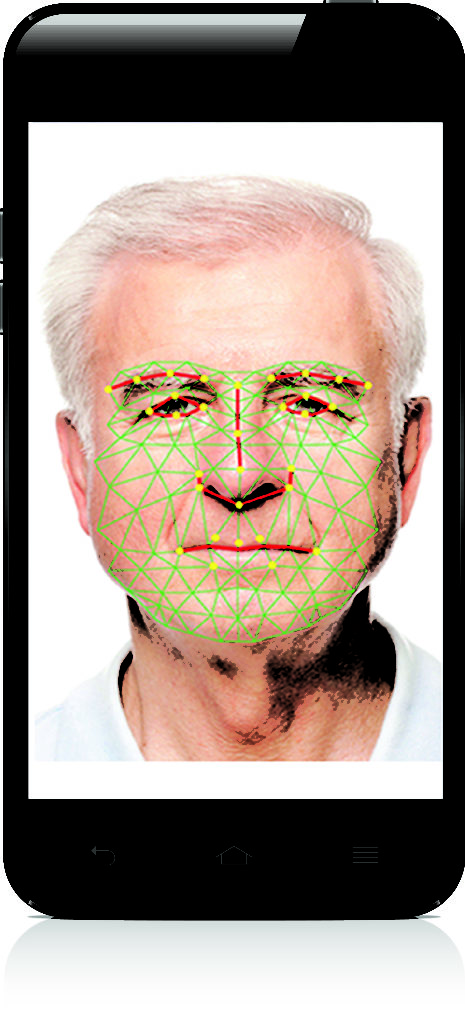
Its smartphone-based medical device uses facial-analysis and Artificial Intelligence (AI) to identify involuntary micro-facial expressions indicative of pain. Combined with other non-facial indicators, PainChek® enables fast, effective, and reliable pain scores, with the whole assessment process taking less than 2 minutes to complete.
Pain and dementia share a complex relationship, and understanding this relationship is key to effective pain management. In the UK, around 70% of care home beds are occupied by residents living with a form of Alzheimer’s or dementia. Of this group, 80% experience pain at any one time, with 50% experiencing persistent pain.
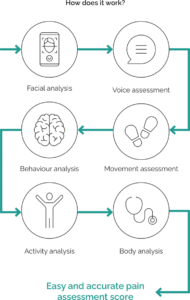
PainChek® – how it works.
PainChek® is fast and easy to use. The smartphone camera records a short video of the person’s face then analyses the images using facial recognition analytics. It automatically recognises and records facial muscle movements that indicate levels of pain.
The caregiver then uses PainChek® to observe and record pain-related behaviours such as movement and how pain is vocalised by the person. Finally, PainChek® calculates an overall pain score and stores the result. This allows the caregiver to monitor the effect of medication and treatment over time.
PainChek® is a world-first pain assessment medical device – with regulatory clearance in Australia, Europe, Canada & New Zealand.