

CMM meets Making Space
CMM: Can you tell me about your product?
Making Space: Our co-production team has created The Co-Pro Game, a guided approach to meaningful engagement. The purpose of the game is about getting people engaged and encouraging conversations and topics that people wouldn’t usually talk about in an affordable way. For the game itself, you roll the dice, and you have corresponding colours that lead to the ‘I’ statements and encourage discussion around that topic – are we meeting your needs for whatever the statement is? If we’re not, that information then gets transferred onto an action plan.
MS: Liam, you have played the game – can you give us some feedback?
Liam: I don’t feel alone, and a part of this game has made me feel like I can ask for help and I know where to find the help now. It’s a lovely way to think. Yes, it can make a difference to your life but it’s not about rushing you. It’s about doing your own steps at your own time and moving forward on to life thinking ‘I want to be here’ but don’t beat yourself up if you don’t do it – at least you’re setting yourself these little goals thinking ‘I know where to find the support; I know what I want in whatever question it is.’
CMM: If you’re successful with the challenge, what areas of the product will you invest in?
MS: We are already rolling the game out as a paper-based version within our services because of the positive impact we know we’ve had. The plan, if we’re successful, would be to put it back to the co-production partners to develop a digitised version and accessible versions for people with different abilities and different age ranges.
CMM: What challenges have you come up against and how have you overcome them?
Liam: It feels like it’s a proper way to get to know what people really want. If you said to somebody in the care profession, ‘This is your care plan; this is what you should be working towards, and this is what we aim to do,’ a lot of people are going to look at it and say ‘What? What? And what?’ But in this game, you can roll the dice, see what you want to deal with, how you want to deal with it and then it’ll identify your needs.
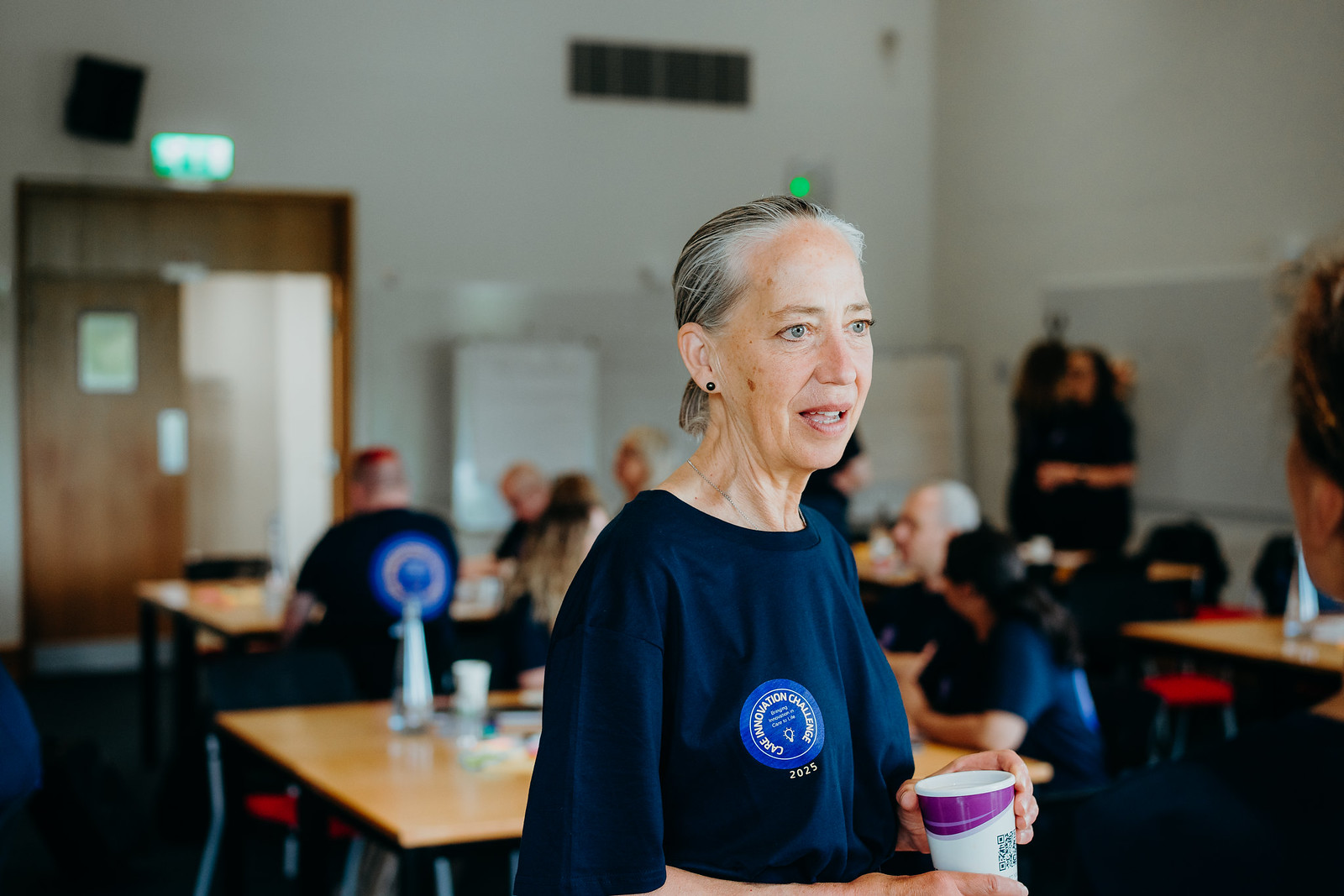
CMM meets Dr Shelley James
CMM: What is your idea in a nutshell?
DSJ: My idea is that most people in care homes really struggle to sleep and also the staff struggle to sleep for all kinds of reasons. We know what it takes to create a good night’s sleep and light is one of the key components but other things are as well, so my idea is to work with care home providers to create a circadian-aware supportive place where both staff and residents can finally get a good night’s sleep, which we know is the key to good mental and physical health.
CMM: What excites you most about the care sector?
DSJ: I think a couple of things really. I had an experience of a traumatic head injury, so I know what it’s like to be tipped upside down and suddenly find myself in a world where I have very few choices about where I spend my time and what I do, so I have a direct feeling about what it’s like to be in that space. The other thing that I find very exciting about the sector is that, unlike other sectors which I’ve also been involved with, there is so much passion and so much personal affection in
this space.
CMM: What sort of feedback have you received about your idea?
DSJ: So far very good and really, really encouraging. I was concerned that it’s not a product and it’s not a turnkey thing – it’s about inviting people to think in a holistic way but looking at tech as a backbone for that holistic approach and I think I’ve been encouraged by the response that it isn’t just about tech – it’s about a solution, a system and a service.
CMM: If you were to be successful in the challenge, where would you invest the money?
DSJ: I have a lot of anecdotal research, so I would use that money to work more with a young researcher who’s a former stroke nurse and is training as a lighting designer. She knows the sector well – she’s passionate and super bright and what I would do is to use that money to work with her to create a much more systematic market survey, so that we can really hone in on which parts of what I’d like to offer are going to add most value.
CMM: With that in mind, what areas of your concept will you seek support with if you are successful?
DSJ: I’d love to have an opportunity to speak to a wider group of people about their experiences and what the barriers to change are. I’d also love a chance to work closely with a couple of people such as Jamie from Nourish or Sean from St Monica’s on creating some pilots. I’m building up a number of use cases, I’m writing a book and I’m doing some other things in that space but I’d love a chance to work in a semi-commercial way, so that I can be more open about things that I’m not sure about.
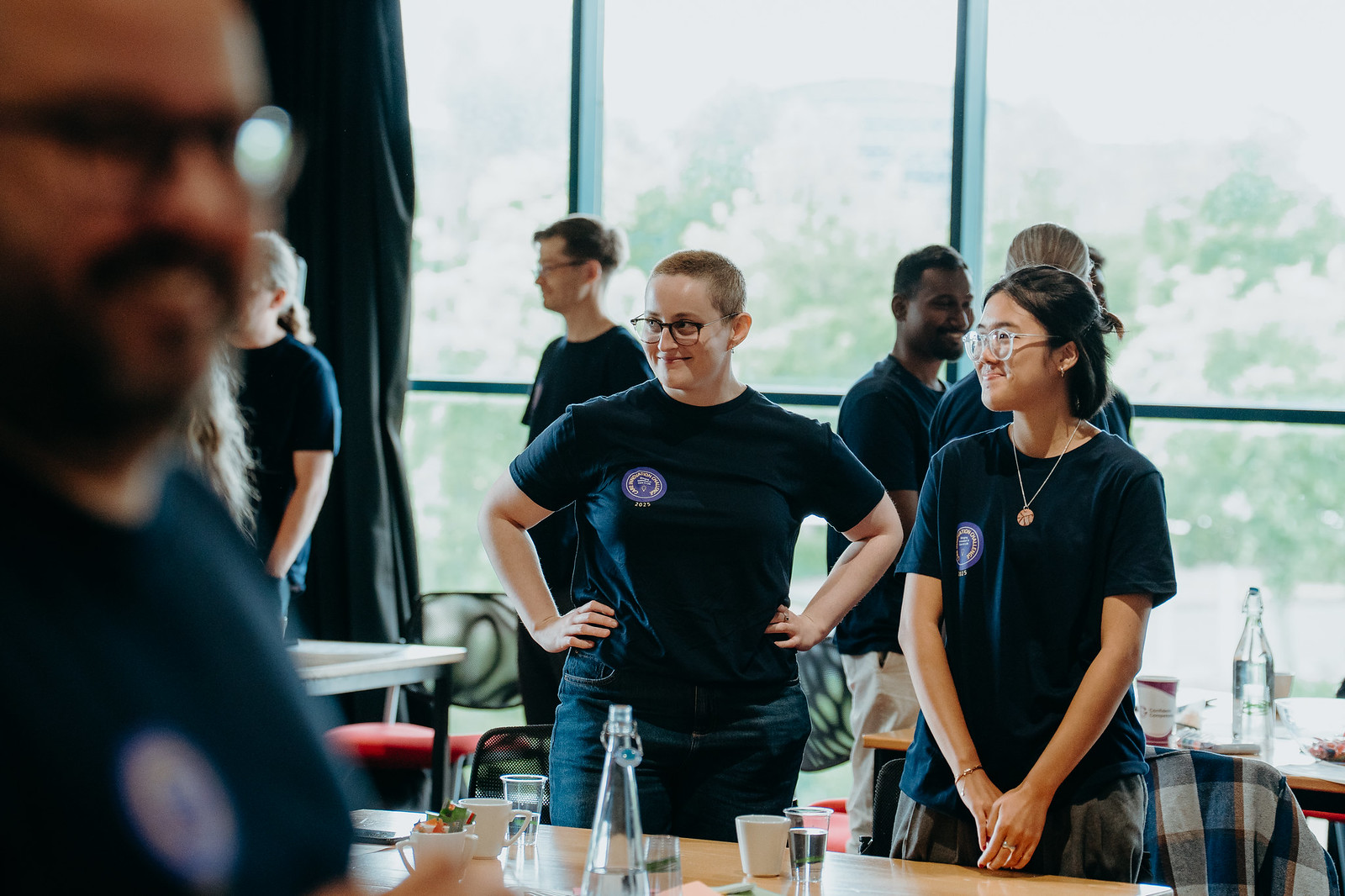
CMM meets Carpe Care
CMM: What interests you about the care sector?
Anna: I have worked in the care sector since I left university. I did a graduate scheme working with a provider for adults with learning disabilities in residential care and I was so fascinated by it. My background is neuroscience – that was my undergraduate degree – and then I went to this provider and focused a lot on how we report and record epilepsy.
Rachel: I’m interested in care and in the innovation aspect and entrepreneurship. I’m interested to see how we can make use of business skills and tech skills and incorporate those into the care world, which I think is needed currently.
CMM: What is your idea in a nutshell?
Anna: Our product is a body-worn camera solution for care workers and other people in care positions who support people who have epilepsy. It’s for them to be able to capture video footage of a seizure while their hands are free to provide hands-on care for the individual. They can then pass that video data along to clinicians to have a real insight into that person’s epilepsy because they very rarely get to see it. They can then make clinical decisions for them to improve their health outcomes and give them a better quality of life.
CMM: What sort of market research have you conducted to support your product?
Anna: I have done some research this year as part of my master’s dissertation, interviewing people in care, which has been valuable for understanding people in the sector and what their experiences are, because we didn’t really know what was out there – what people currently do in epilepsy. Do they use video much? Do they use digital? Are they still using paper? I didn’t really understand.
CMM: What feedback have you received about your product?
Anna: A lot of feedback has been about what makes it different, what makes it stand out, what’s our unique selling point and who’s going to purchase it because it’s a specific kind of innovation. The feedback is to make sure we hone in on who we want to help and what we’re trying to achieve – what are the actual outcomes? When you’re pulling on the heartstrings, what is the thing you want to do for people because that’s what grabs people’s attention. It’s all about not making it about the innovation itself but who it actually helps.
CMM: What areas would you invest in if you were to be successful with the challenge?
Anna: It would be lovely to get that money for our first, in-depth pilot and work with people who have epilepsy. It would be about getting people on board and being able to use a camera and capture actual data, seeing how useful it is, what blockers there are and being able to run something quite effective and understand in depth what we’re trying to achieve.
CMM: What sort of challenges have you faced during the implementation of your idea and how have you overcome them?
Anna: So far it’s just being at zero, not knowing the right people and not having the funding. So far, I’ve not had the business background and it’s only recently that Rachel has come on board and now we’re kicking off, so I think it’s capacity so far and developing those links. Being on the challenge last year helped me to develop links and now I’m ready to build on them.
For the five finalists it all comes down to preparations for The Care Show on 8th and 9th October. Follow @CareInnovHub and use #CareInnovationChallenge for updates.